

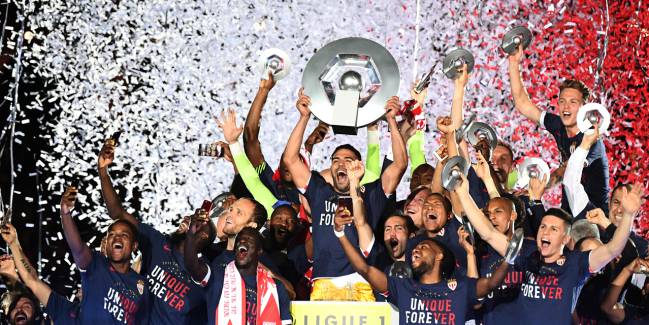
In Ligue 1 2017/18, a few clubs turned their stadiums into fortresses, stacking home wins in a way that caught both fans’ imagination and bookmakers’ attention. Paris Saint-Germain, in particular, dominated at the Parc des Princes as part of a season in which they scored 108 league goals and cruised to the title with 93 points, creating extended spells where they were near-automatic home favourites. For regular bettors, the real question was not whether these streaks were impressive, but whether the odds on those home wins still carried value—or if the time had come to start betting against the momentum narrative.
Why Home Winning Streaks Look So Tempting to Bettors
Home winning streaks combine two powerful psychological drivers: recency bias and the comfort of perceived certainty. Bettors see a team with several consecutive home victories and project that pattern forward, especially when combined with highlight reels, crowd atmosphere and media coverage that reinforce the idea of a “fortress.” Research on betting markets shows that odds often overreact to favourable and unfavourable news, including winning and losing streaks, which means prices on teams with long home runs can shorten beyond what underlying performance alone would justify. The result is that many recreational bettors keep backing streaking home sides even as the value in those bets quietly erodes.
Which 2017/18 Ligue 1 Teams Put Together Strong Home Runs?
The headline story was PSG, who combined a longest overall league winning streak of nine games with formidable home form, reflecting their dominance in both attack and defence. Monaco and other top-four contenders also enjoyed extended spells without defeat at home, supported by strong attacking outputs and the typical Ligue 1 advantage that top clubs enjoy in their own stadiums. Beneath that level, smaller teams sometimes stitched together shorter home streaks—three or four consecutive wins—that looked impressive in isolation but often reflected favourable schedules or temporary purple patches rather than a stable, repeatable edge.
How Bookmakers React to Ongoing Home Streaks
Bookmakers price matches with at least three forces in mind: base team strength, situational factors and expected betting behaviour. When a team is on a long home winning run, that third factor becomes especially important because operators know that many customers will back the streak, regardless of deeper context. To manage exposure, books can shade lines downward on the home favourite, making them slightly shorter than a model based purely on power ratings and injuries would recommend, so that they collect a better margin on the surge of public money. Over time, this shading means that even if the streaking side remains strong, blindly following the pattern yields bets that are fairly priced at best and, more often, a little expensive.
Mechanisms: From Early Value to Late Overpricing
In the early stages of a home run—two or three wins—prices may still be close to fair because models and markets have not fully reacted, especially if the streak began against weaker opponents. As the run lengthens and media attention mounts, more casual bettors join in, pushing odds lower and creating a gap between a team’s actual win probability and its implied probability at the window. Eventually, books, sharp bettors and even some regulars anticipate this overreaction: they either step aside from short-priced home favourites or start looking for spots to oppose them, particularly in matches where situational factors and underlying metrics hint that the streak is more fragile than the narrative suggests.
List: Conditions That Justify Following a Home Streak
Before deciding whether to ride a home winning streak, a regular bettor can walk through a checklist of conditions that help distinguish sustainable runs from soon-to-burst bubbles. These conditions are grounded in tactical realities, scheduling and market behaviour rather than pure emotion.
- Underlying metrics support the results: xG, shot differential and chance quality at home are strong, indicating the team is not simply scraping wins with few chances and lots of luck.
- Opponents during the streak were not disproportionately weak; at least some wins came against mid-table or strong sides, suggesting the team’s home performance scales up against better competition.
- Upcoming opponents are tactically or physically disadvantaged—fatigue, travel, fixture congestion or mismatches in style hint that the home side’s strengths will matter again.
- Market prices remain within a reasonable band: odds imply a win probability that, after margin, still aligns with model estimates instead of reflecting a huge popularity premium.
- Squad depth at home is intact: key attackers, creators and defenders who drive the home advantage are available, so the version of the team that built the streak is similar to the one on the pitch now.
Interpreting this list, the idea is to follow a home streak only when results, performance and price all point in the same direction. A PSG or Monaco on a winning run with strong xG numbers, stable lineups and an upcoming opponent coming off a draining European night may still justify another bet at home, even at compressed odds. In contrast, a mid-table team that has scraped three narrow wins against relegation candidates and now faces a rested top-four side at a heavily shortened price is a classic candidate not to follow, because the streak depends more on soft opposition and luck than on durable superiority.
When It Makes More Sense to Fade the Home Run
Turning to the opposite side, there are scenarios where betting against an ongoing home streak offers better long-term expectation. Academic work on overreaction in soccer betting odds shows that markets sometimes push prices too far after runs of wins or losses, especially where public sentiment is intense. In Ligue 1 2017/18, spots where a streaking home side faced a tactically awkward opponent—compact defence, dangerous counters, or strong away record—often set up situations where the home price was shorter than fundamentals justified, making the draw or away side on the handicap more appealing than backing the “fortress.”
Within this tactical and statistical reading, a regular bettor also had to decide how and where to turn those conclusions into actual stakes, and this is where options like แทงบอล10บาท could enter the picture as part of the weekly workflow. For someone paying attention to home streaks, the key was to treat that online betting site as a live reflection of sentiment: watching whether its odds on the home favourite tightened beyond what broader markets and personal models suggested, checking alternative lines (like +handicaps or double chance on the visitor), and only stepping in when the combination of overreaction, situational factors and price produced a genuinely favourable risk–reward profile rather than just another chance to join the crowd.
Table: Follow vs Fade – Typical Ligue 1 Home Streak Scenarios
A structured comparison helps clarify when to ride a home streak and when to step aside or oppose it. The table below outlines stylised scenarios drawn from patterns seen in top-heavy European leagues, including Ligue 1’s PSG-era landscape.
| Scenario | Follow or Fade? | Reasoning |
| Elite team on 5+ home wins, strong xG and shot edge, facing mid-table side after midweek European fatigue for the visitor. | Cautious follow if price not extreme | Underlying dominance and situational edge support another win; value depends on whether odds reflect these factors fairly. |
| Mid-table team on 3–4 narrow home wins vs bottom clubs, now hosting top-four opponent at shorter price than season-long ratings imply. | Fade or avoid | Streak built on soft schedule; price likely inflated by recency bias, while opponent has higher baseline quality. |
| Relegation-battler with strong home xG but mixed results converts several draws into wins, markets react modestly. | Selective follow | Improvement is performance-backed; if odds haven’t fully adjusted, there may be value before narrative catches up. |
| Team on long home run but missing key striker and full-back, facing compact away side with good counter-attack record. | Fade or look at away handicap | Structural strengths behind the streak are weakened; opponent profile suits disrupting momentum, yet price may still over-credit the streak. |
| Streaking home side in dead-rubber late-season game with rotation, vs opponent fighting for European places or survival. | Lean fade or no bet | Motivation flips: opponent has more at stake, and rotation undermines the home edge even if the streak remains in headlines. |
This matrix shows that “follow vs fade” is not about the streak itself but about the forces behind it and the price being offered. In Ligue 1 2017/18, backing PSG at home remained rational in many cases because performance and resources supported heavy favourite status, but even there, handicaps and totals could be overcooked when bettors chased consecutive big wins. For smaller clubs, home streaks tended to be more fragile; once the schedule stiffened or injuries hit, continuing to bet them purely on momentum often meant buying into a story just as its statistical basis weakened.
How Psychology Distorts Judgement Around Streaks
From a discipline and psychology standpoint, streaks are dangerous precisely because they feel more predictive than they are. Cognitive biases—recency bias, confirmation bias, and the tendency to remember dramatic wins more than quiet losses—push bettors to search for reasons to believe a run will continue, ignoring signs of regression. Studies on soccer betting underscore that profitable strategies usually involve going against crowd overreaction, which sometimes means stepping aside from the most comfortable bets, including hot home favourites that dominate social media conversations. Regulars who recognised this tended to use streak awareness as a starting point for scrutiny, not as a green light.
When “Fortress” Narratives Completely Break
There are also clear points where home streak narratives snap under real-world pressure. Managerial changes, tactical overhauls, major injuries or a shift in competition priorities—such as a deep European run—can all alter how a team approaches home matches, making past streaks a poor guide to future performance. In some cases, a single heavy defeat can expose underlying fragilities that had been masked by narrow wins, prompting a reset in both odds and market perception; bettors who continue to back the now-broken fortress purely on name rather than reassessed fundamentals risk carrying yesterday’s storyline into a very different reality.
Separating Streak-Based Betting from Other Gambling Activity
Finally, turning an understanding of home winning streaks into long-term edge requires the same discipline as any value-based approach: tracking results, measuring closing-line value, and regularly testing whether the “follow or fade” decisions actually add EV rather than simply sounding clever. Academic work on sports betting markets emphasises that exploitable biases—like overreaction to streaks—do exist, but they are small and require rigor to harvest. In the broader online gambling environment, those habits share space with casino-style products and quick-hit entertainment; recognising that a casino online website operates on fundamentally different mathematical foundations helps ensure that carefully extracted profit from nuanced streak analysis is not undermined by exposure to games where the house edge, not market mispricing, dictates the outcome.
Summary
Ligue 1 2017/18’s home winning streaks, led by a dominant PSG and supplemented by runs from other strong sides, offered a tempting invitation to “just follow the fortress” at every opportunity. Yet once prices had absorbed public enthusiasm, the true question for regular bettors was whether the odds still reflected realistic win probabilities or whether they had been pulled beyond fair value by recency bias and narrative. By checking underlying performance, schedule strength, injuries, motivation and price bands before deciding to follow or fade each streak, bettors could transform a seductive storyline into a structured framework that occasionally supported riding the trend but just as often pointed toward stepping aside—or carefully betting against the run—when the market’s belief outpaced the team’s actual edge.
